
Between the Land
and the Sea
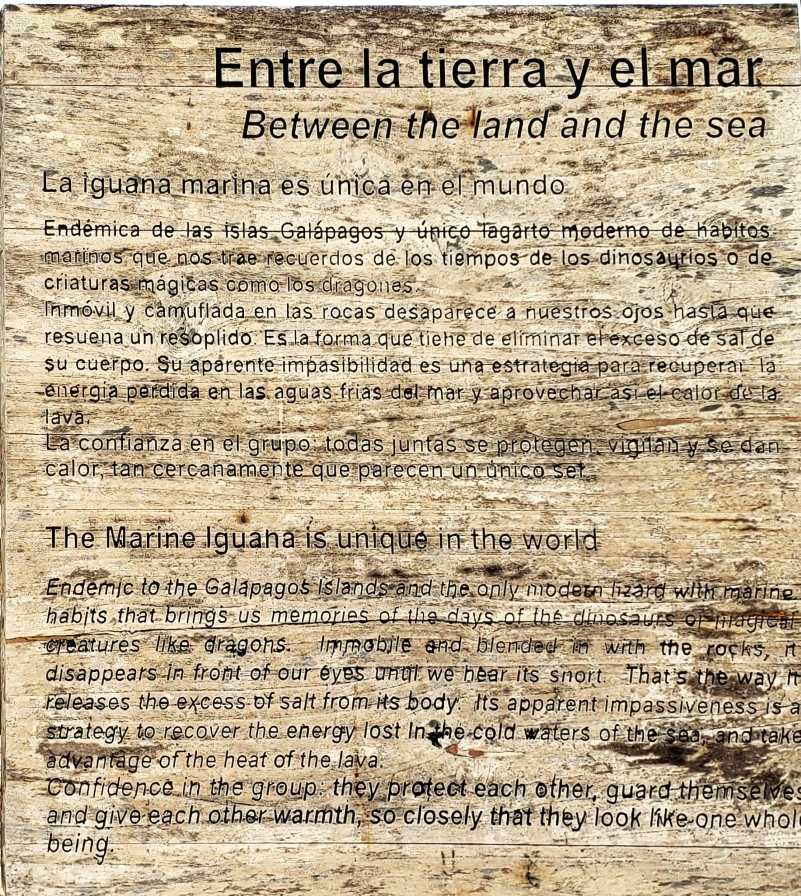
At Tortuga Bay, one of the most breathtaking beaches in the Galápagos Islands, a simple sign quietly introduces visitors to one of the most extraordinary creatures on Earth.
Many walk past it.
But if you stop and read, you begin to understand something deeper—a story of survival, adaptation, and evolution.
A creature that exists between worlds.
Between heat and cold.
Between stillness and motion.
Between land… and sea.
The Galápagos marine iguana is not just unique—it is a living symbol of what makes the Galápagos Islands one of the most fascinating destinations for wildlife lovers and travelers exploring Ecuador.
A Living Relic of Evolution
When Charles Darwin arrived in the Galápagos in 1835 aboard the HMS Beagle, he encountered species that would eventually help shape one of the most important scientific theories in history.
Among them were marine iguanas—dark, rugged reptiles sprawled across volcanic rocks.
Darwin described them as “imps of darkness,” struck by their almost prehistoric appearance. Today, however, we recognize them as one of the clearest examples of evolution in action.
Their existence reflects the extraordinary isolation of the Galápagos, where species adapt in ways found nowhere else on Earth.
The Only Ocean-Swimming Lizard on Earth
The marine iguana holds a remarkable distinction:
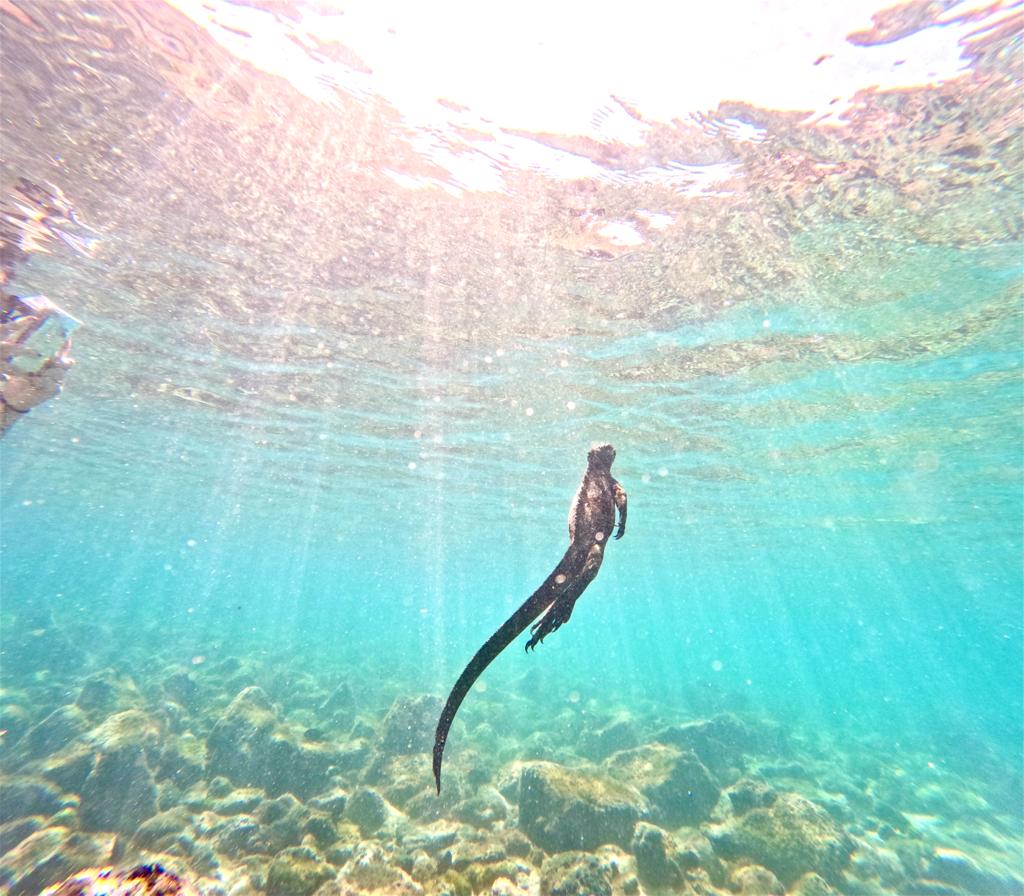
It is the only modern lizard that feeds in the ocean.
According to the World Wildlife Fund, this species has evolved specialized adaptations that allow it to survive in a marine environment—something no other lizard has achieved.
These adaptations include:
- Flattened tails for efficient swimming
- Strong claws to grip underwater rocks
- The ability to slow heart rate while diving
- Dark coloration to absorb heat rapidly
Marine iguanas dive into cold waters to feed on algae, making them one of the most unique animals of Ecuador and a highlight of any Galápagos wildlife experience.
The Art of Stillness
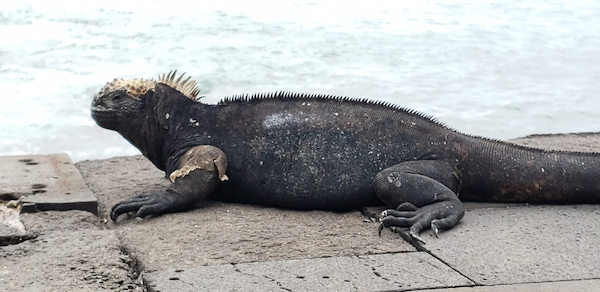
One of the most fascinating aspects of the marine iguana is its apparent immobility.
Blending perfectly with volcanic rock, it can disappear before your eyes.
But this stillness is strategic.
Every movement costs energy. Every dive requires recovery. Marine iguanas conserve energy by remaining still, absorbing heat, and preparing for their next journey into the ocean.
This delicate balance between action and rest is what allows them to survive in such a demanding environment.
Life in Cold, Nutrient-Rich Waters
Unlike typical tropical destinations, the waters surrounding the Galápagos are often cold.
Ocean currents such as the Humboldt Current bring nutrient-rich waters that support abundant marine life—but they also create challenging conditions for reptiles.
Marine iguanas must constantly balance:
- Feeding in cold ocean waters
- Losing body heat rapidly
- Returning to land to warm up
This explains their behavior: long periods of stillness on sunlit lava rocks are not inactivity—they are essential for survival.
Why Marine Iguanas “Sneeze”
One of the most fascinating aspects of the marine iguana is its apparent immobility.
Blending perfectly with volcanic rock, it can disappear before your eyes.
But this stillness is strategic.
Every movement costs energy. Every dive requires recovery. Marine iguanas conserve energy by remaining still, absorbing heat, and preparing for their next journey into the ocean.
This delicate balance between action and rest is what allows them to survive in such a demanding environment.
Strength in Numbers: Social Behavior
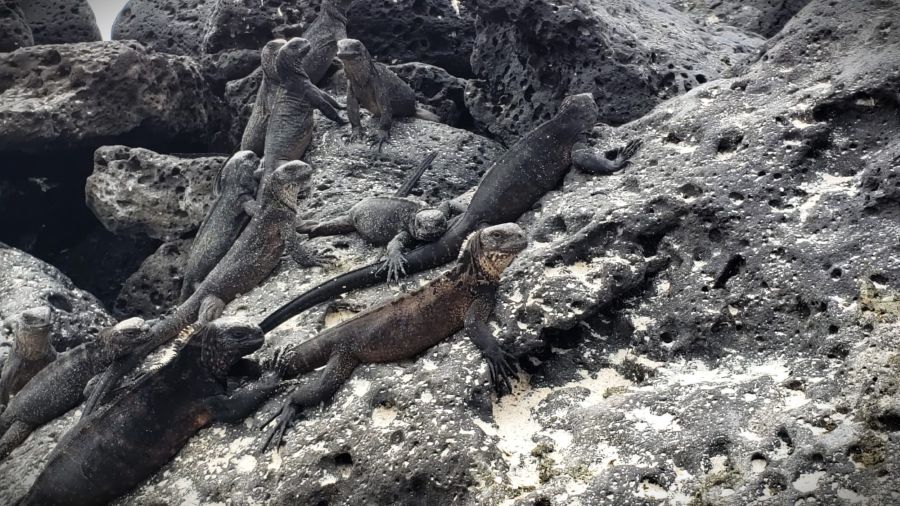
Marine iguanas rarely exist alone.
Instead, they gather in large groups, forming dense clusters that may look like a single organism.
This behavior offers several advantages:
- Conserving heat by huddling
- Increased protection from predators
- Reduced energy loss
This sense of collective survival is another reminder that life in the Galápagos is shaped by cooperation as much as competition.
Color Changes and Island Variations
Although often seen as black or dark gray, marine iguanas can display vibrant colors during mating season.
Depending on the island, males may show:
- Red hues
- Green tones
- Turquoise highlights
Research from the Charles Darwin Foundation has shown that different island populations have distinct characteristics, making each encounter slightly unique.
Where to See Marine Iguanas in the Galápagos
One of the best parts of visiting the Galápagos is how accessible its wildlife is.
Marine iguanas can be seen in several key locations:
- Tortuga Bay – ideal for close observation
- Isabela Island – home to some of the largest populations
- Fernandina Island – pristine ecosystems
Many of these destinations can be included in well-designed and tailor-made tours and itineraries land based or fixed itineraries on board of a cruise
Best Time to See Marine Iguanas
Responsible Wildlife Viewing in Ecuador
The Galápagos Islands are one of the most protected ecosystems on Earth.
Organizations like the Galápagos National Park Directorate enforce strict guidelines to preserve this fragile environment.
When observing marine iguanas:
- Keep a safe distance
- Do not touch or feed them
- Stay on marked paths
- Follow your guide’s instructions
Responsible travel ensures these species remain protected for future generations.
Conservation Challenges
Despite their resilience, marine iguanas face real threats:
- Climate events like El Niño
- Reduced algae availability
- Introduced predators
- Human impact
Conservation efforts supported by organizations such as the Galápagos Conservancy are critical to their survival.
Why the Marine Iguana Matters
The marine iguana represents everything that makes the Galápagos extraordinary:
- Evolution in action
- Adaptation to extreme conditions
- The importance of conservation
It is one of the most iconic animals of Ecuador and a highlight of any trip to the islands.
Planning Your Trip to See Marine Iguanas
Seeing marine iguanas in the wild is an unforgettable experience—but understanding them adds a whole new dimension.
If you’re planning to explore wildlife like this, consider joining one of our guided tours of Ecuador.
A well-designed itinerary allows you to experience not only marine iguanas, but also the full diversity of the Galápagos and mainland Ecuador.
If you’re looking for a deeper and more meaningful experience, explore our custom Ecuador tours designed around wildlife, culture, and adventure.
Final Reflection: Between Two Worlds
Back at Tortuga Bay, the sign tells a simple story.
But the reality is far more powerful.
The marine iguana survives in a place where few creatures could.
Between heat and cold.
Between land and sea.
Between stillness and motion.
It is not just a reptile.
It is a symbol of transformation.